Beecheii
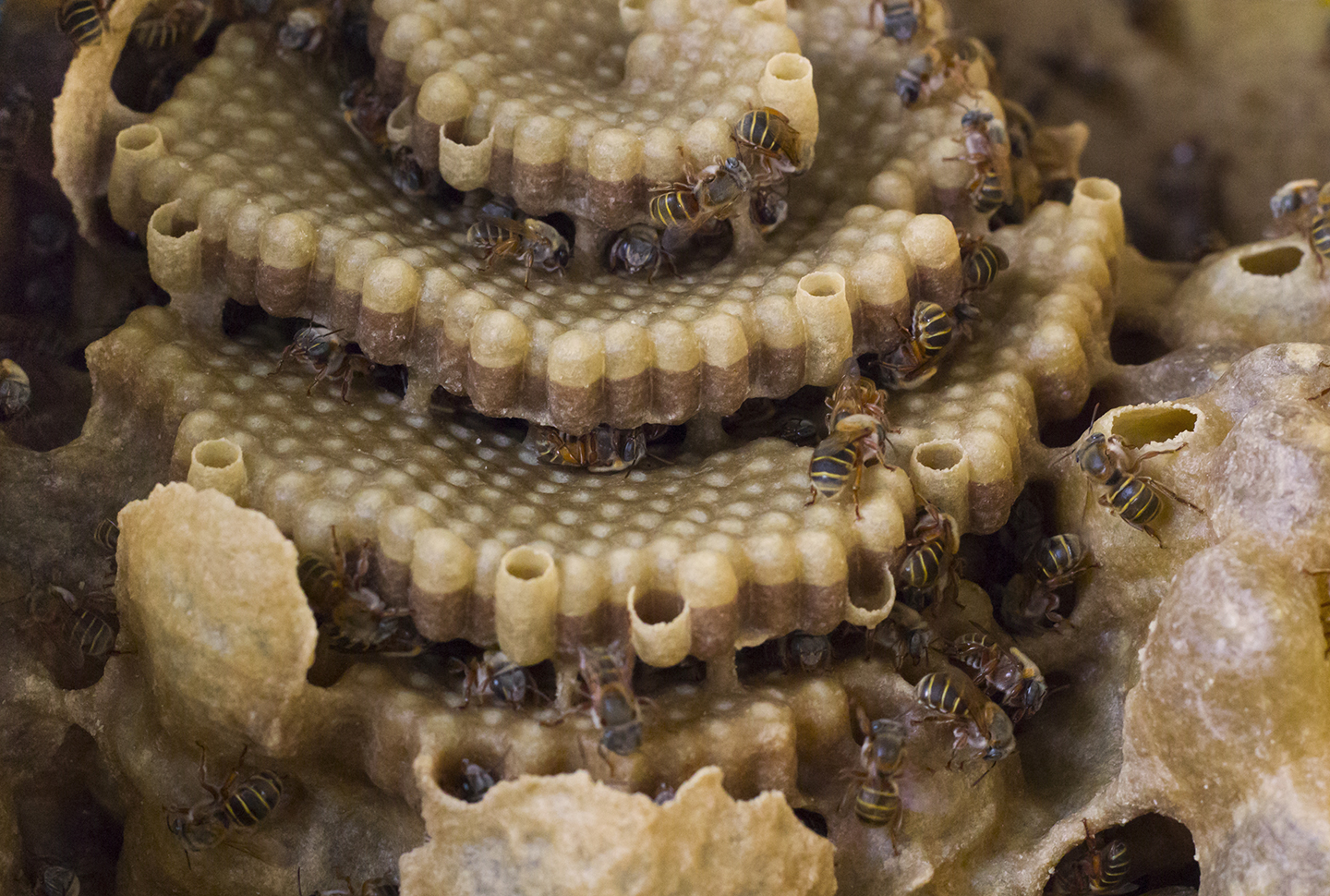
“Kaab” in Maya means both “bee” and “universe”; the ancient Maya thus named the Melipona Beecheii bee for its ability to restore and heal.
This bee is known as “The Sacred Maya Bee” and produces honey that is significantly superior due to its beneficial properties.
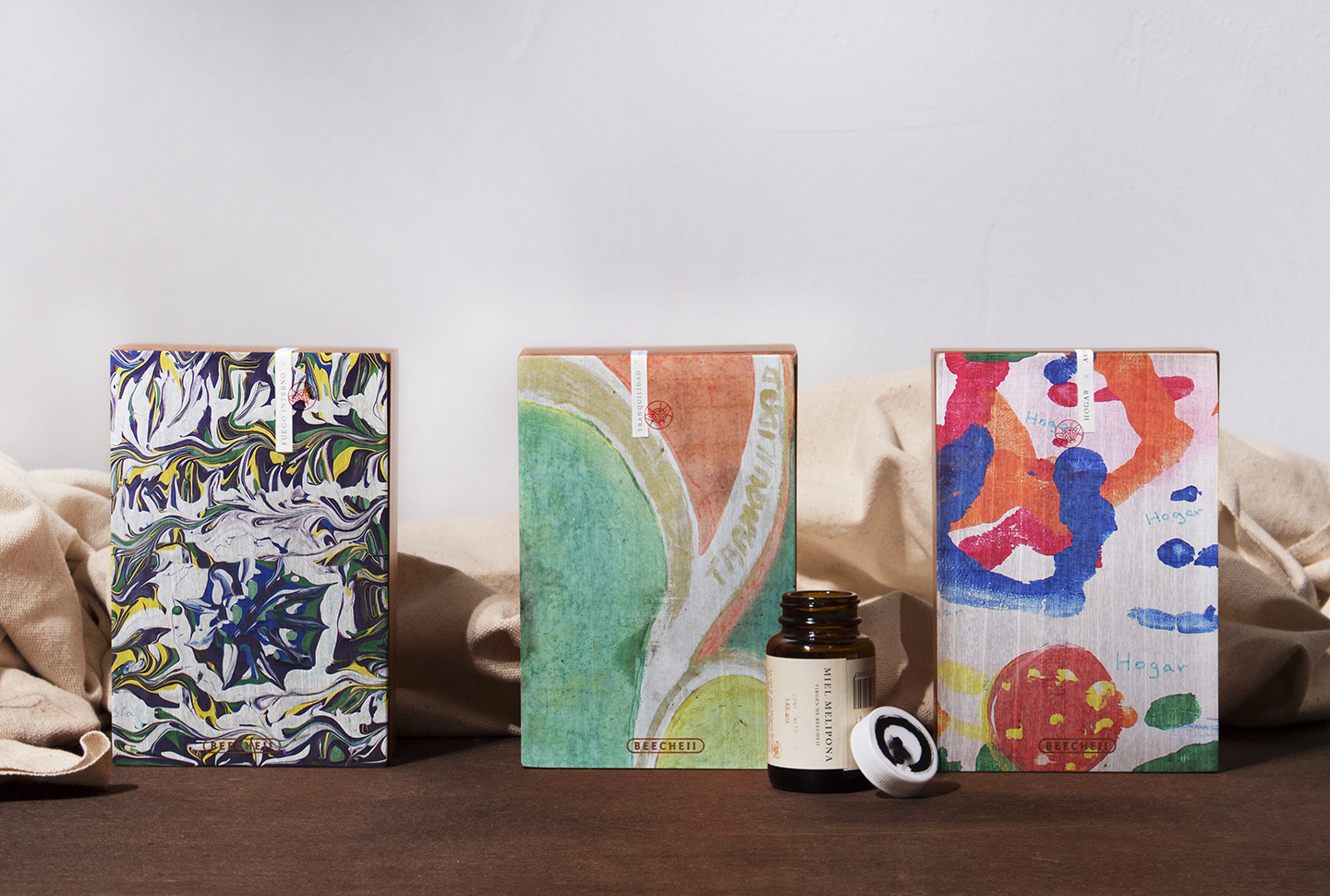
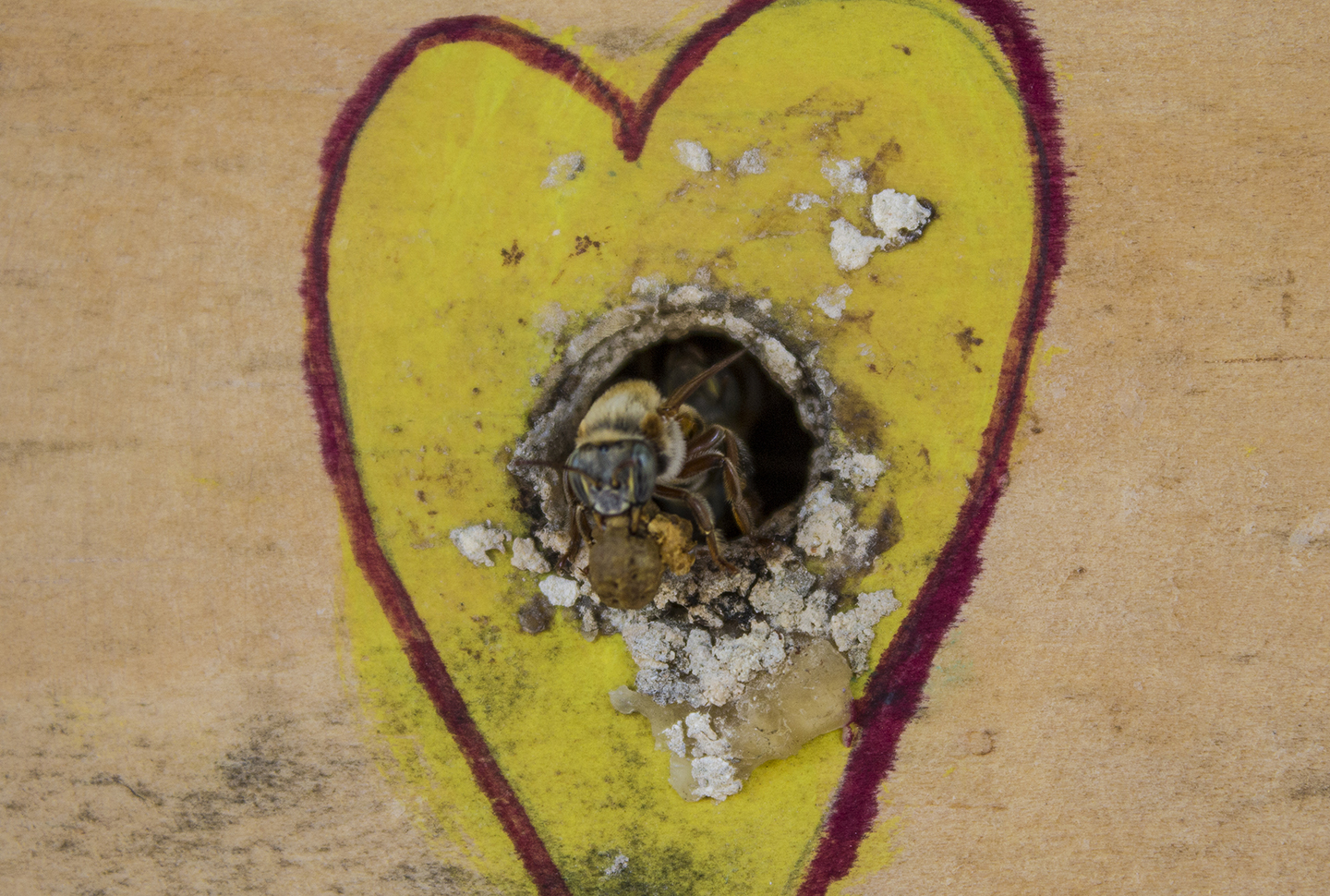
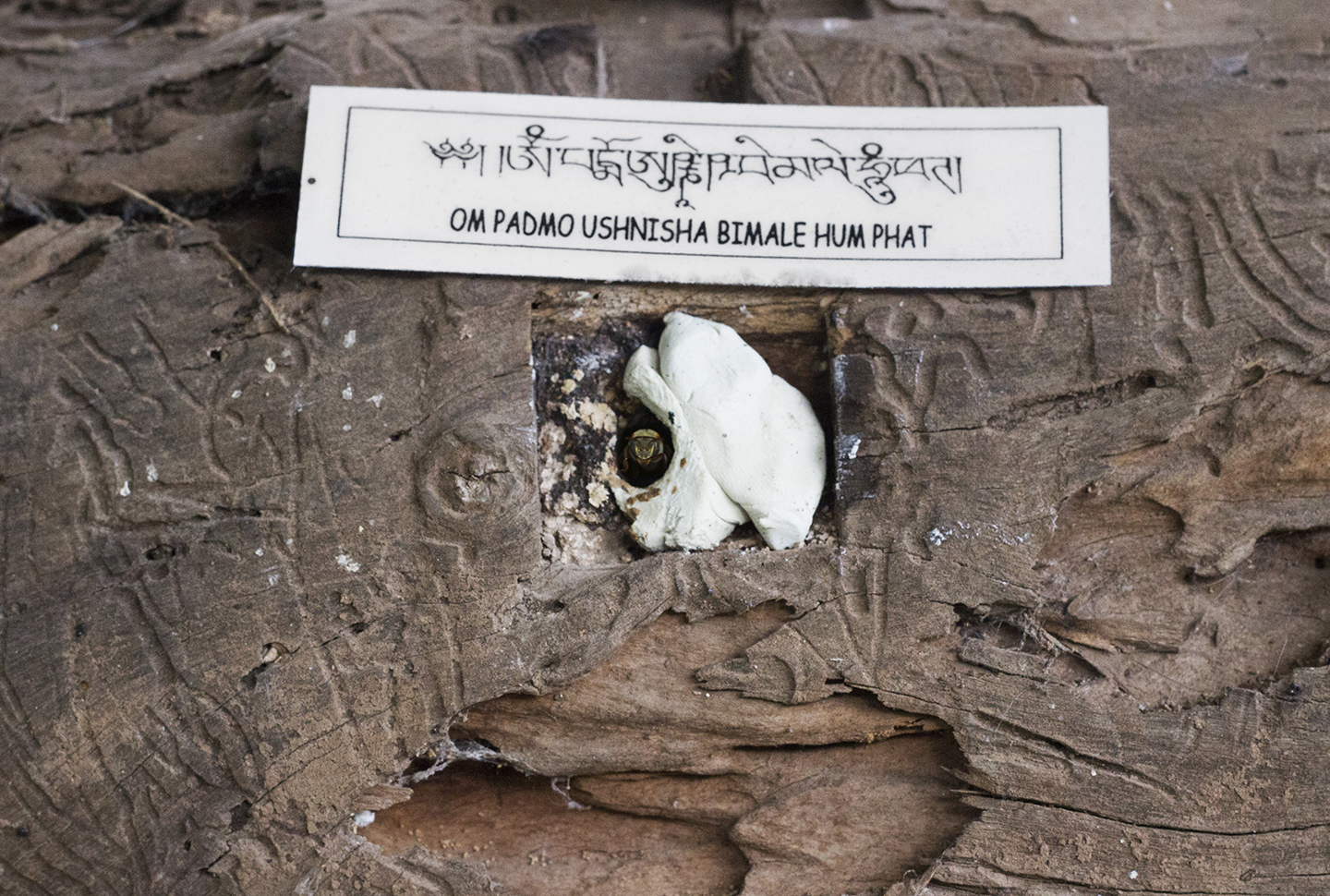
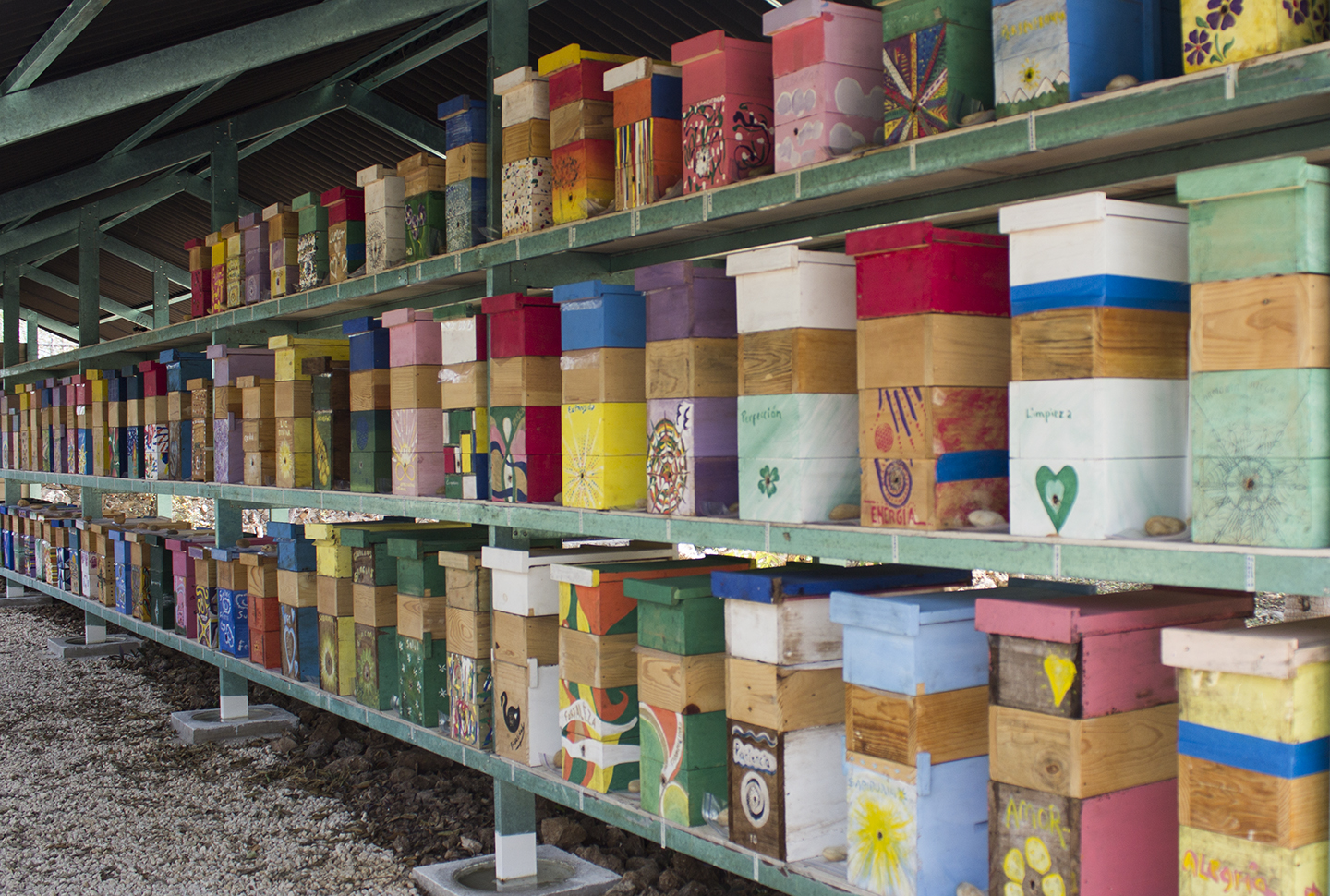
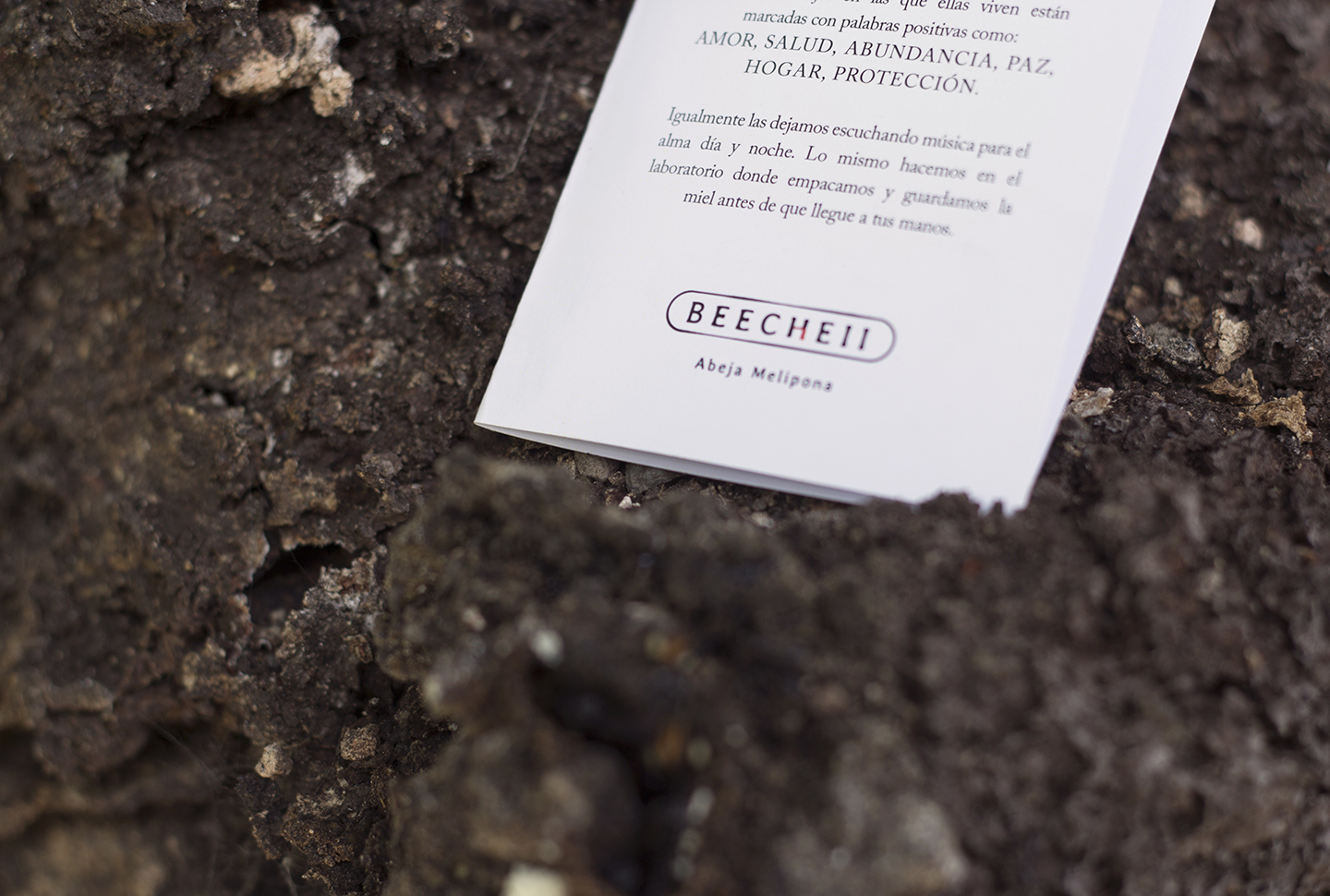
Beekeepers treat the bees with extraordinary care and respect; they are looked after as part of the family. The hives are decorated with drawings and paintings created by children and words such as: Love, Health, Abundance, Peace, Home, Faith, and Protection, in accordance with the teachings of Masaru Emoto.
Similarly, all the hives have been blessed according to Buddhist tradition, and mantras and music are played for them at all times.
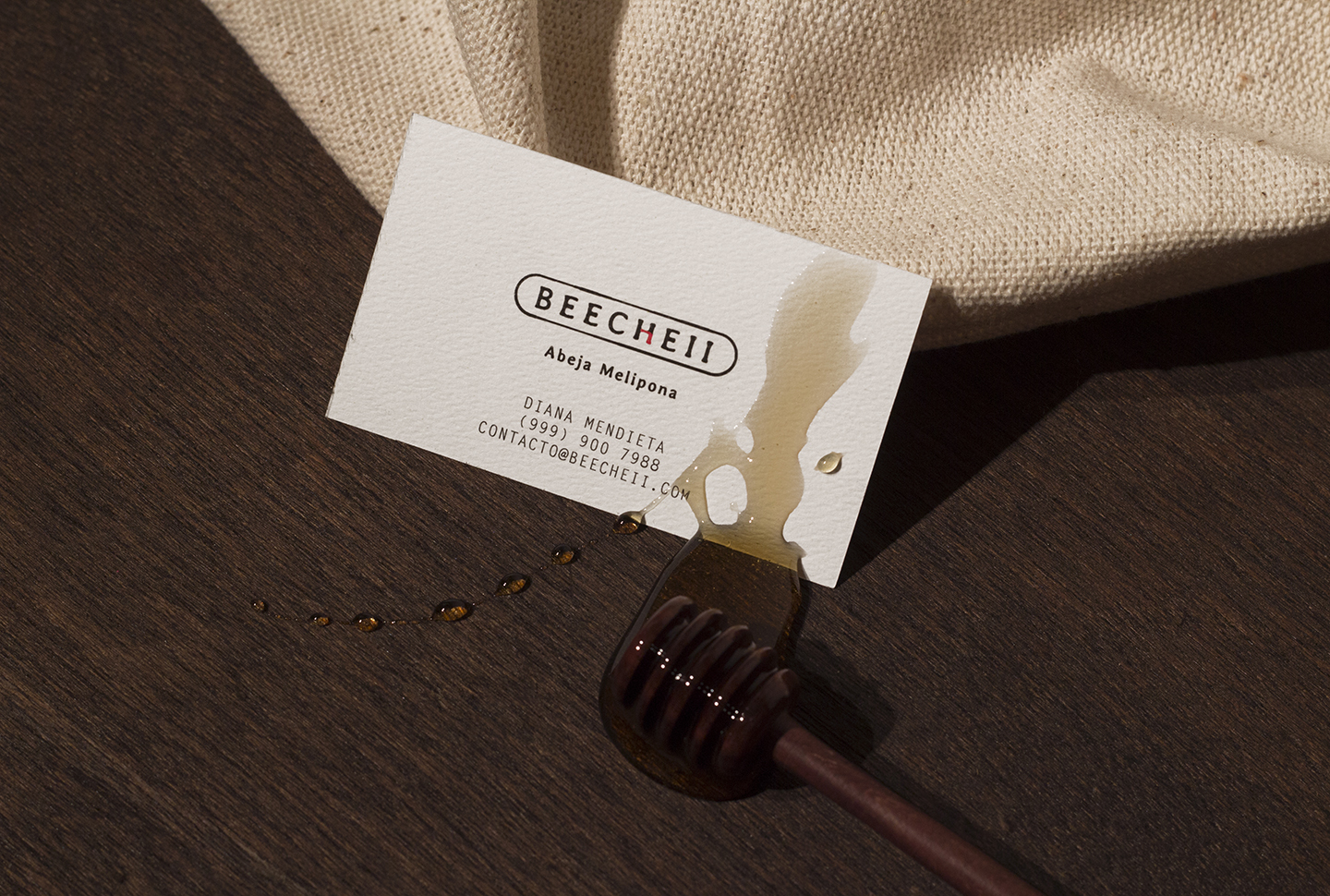
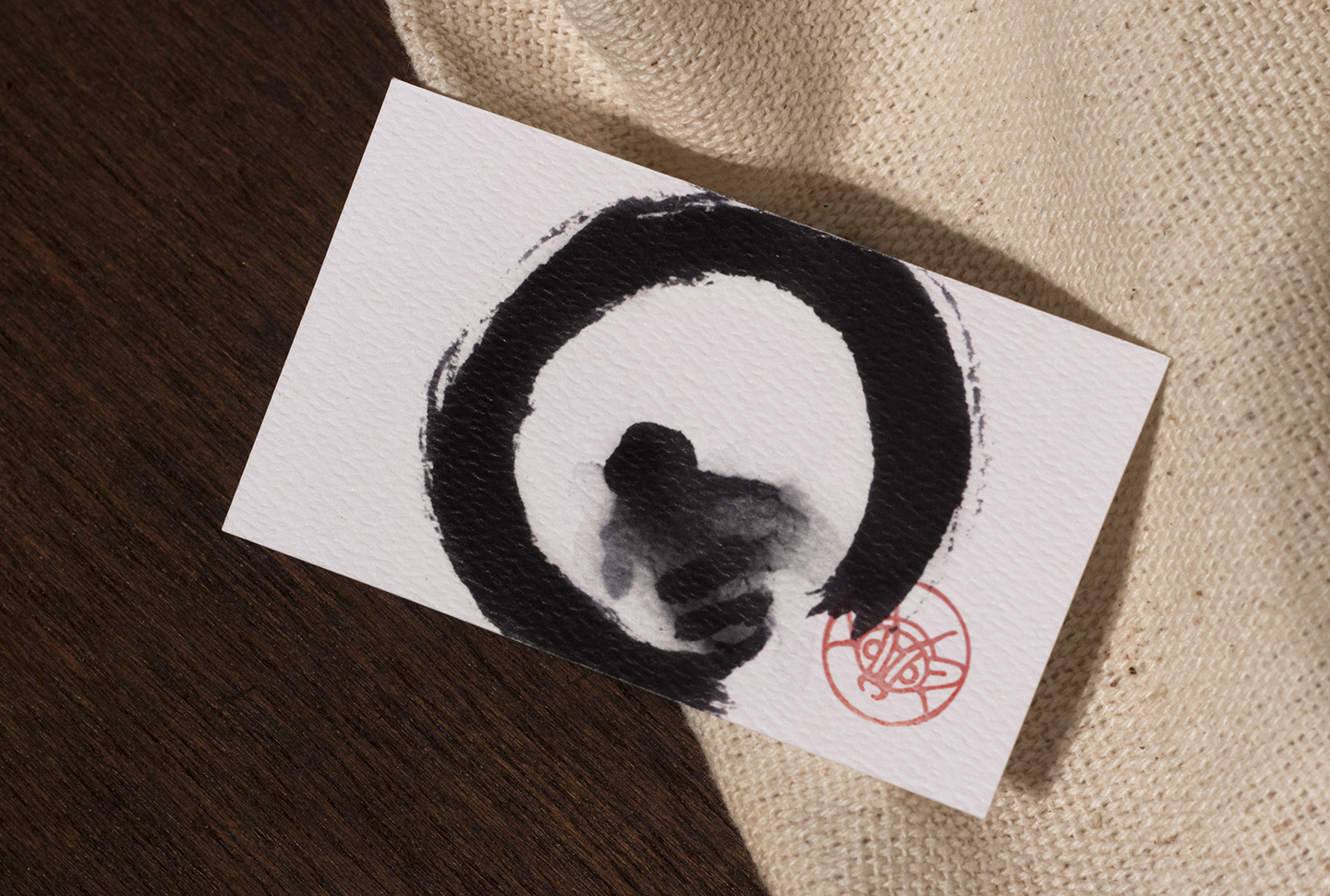
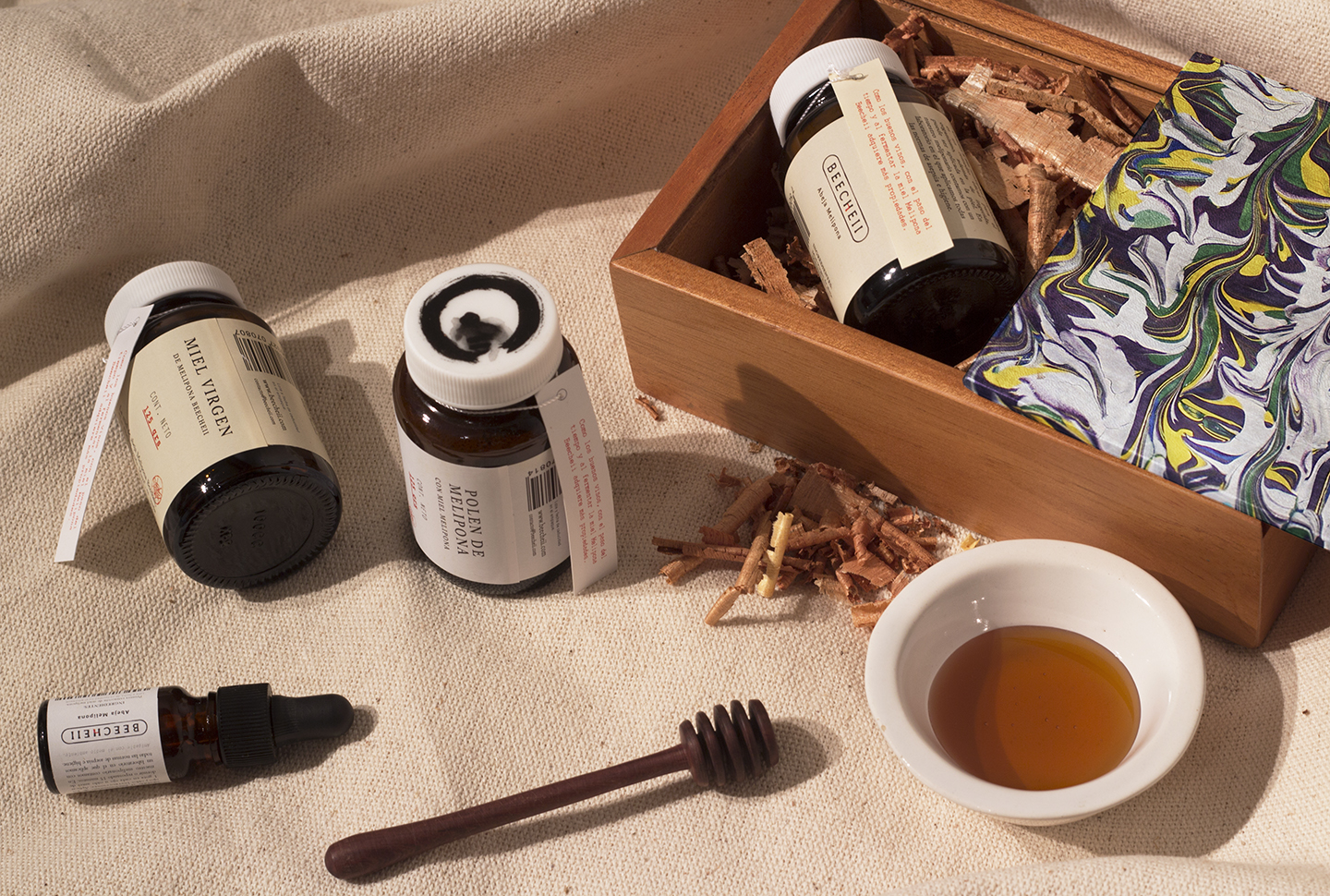
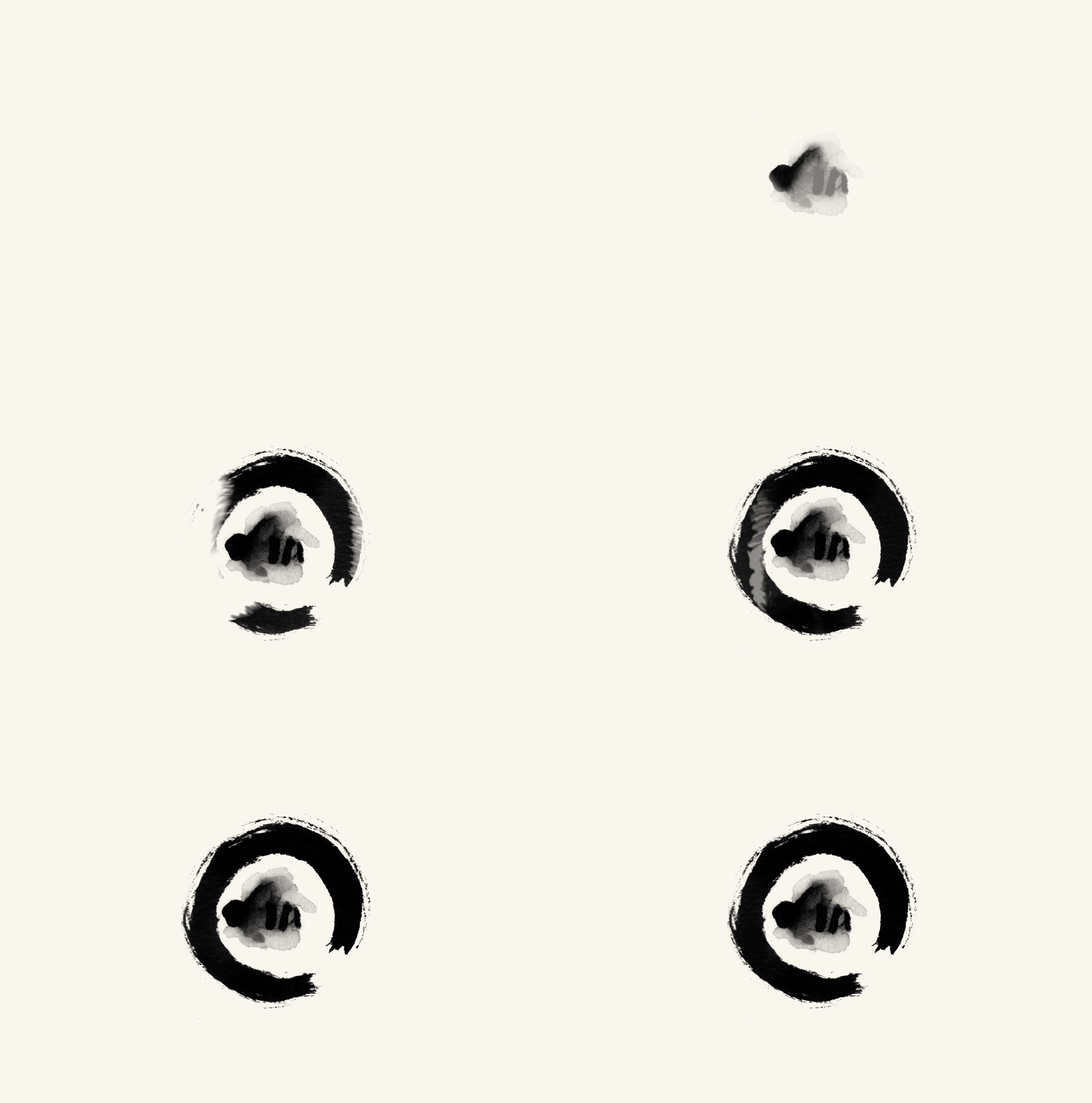
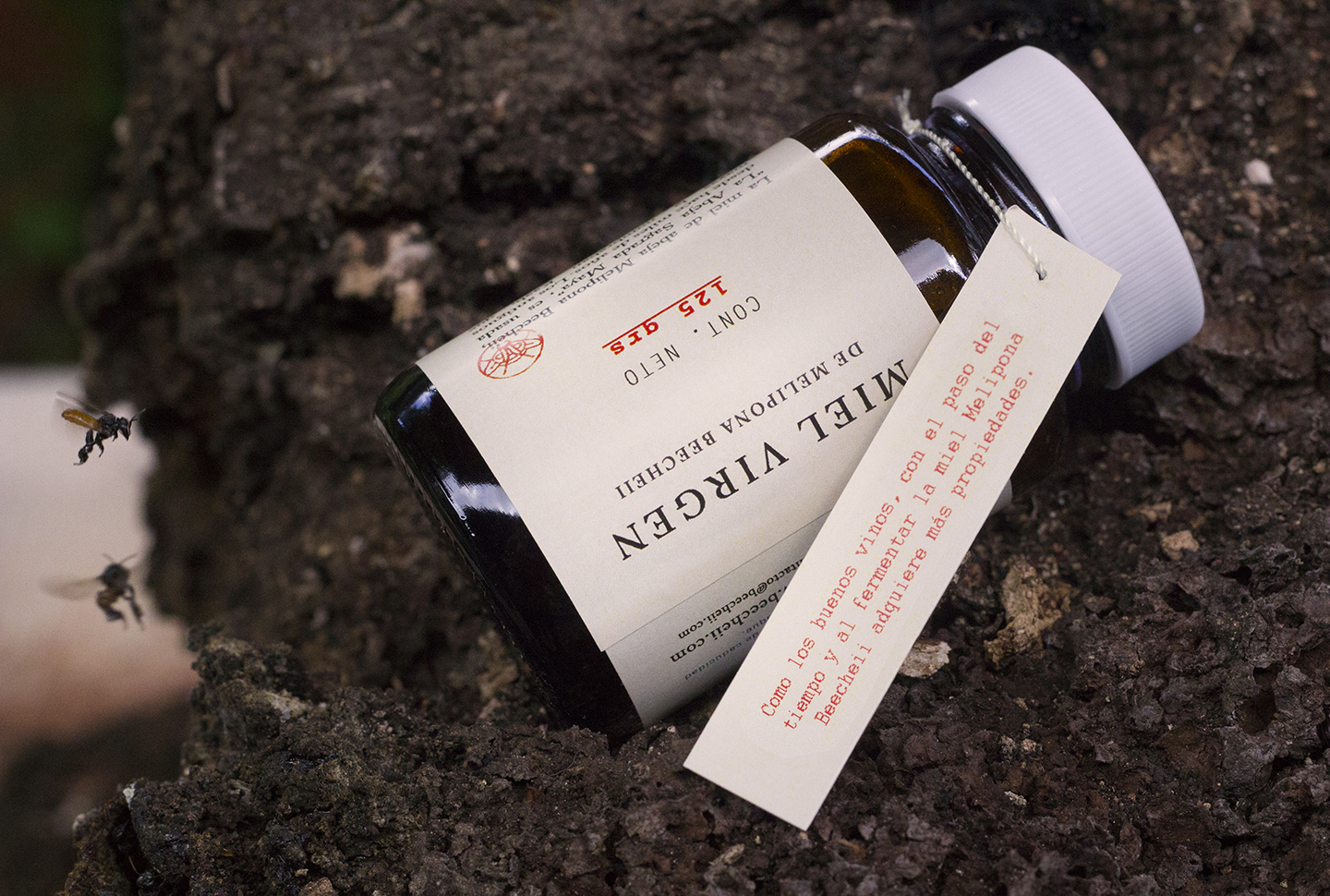
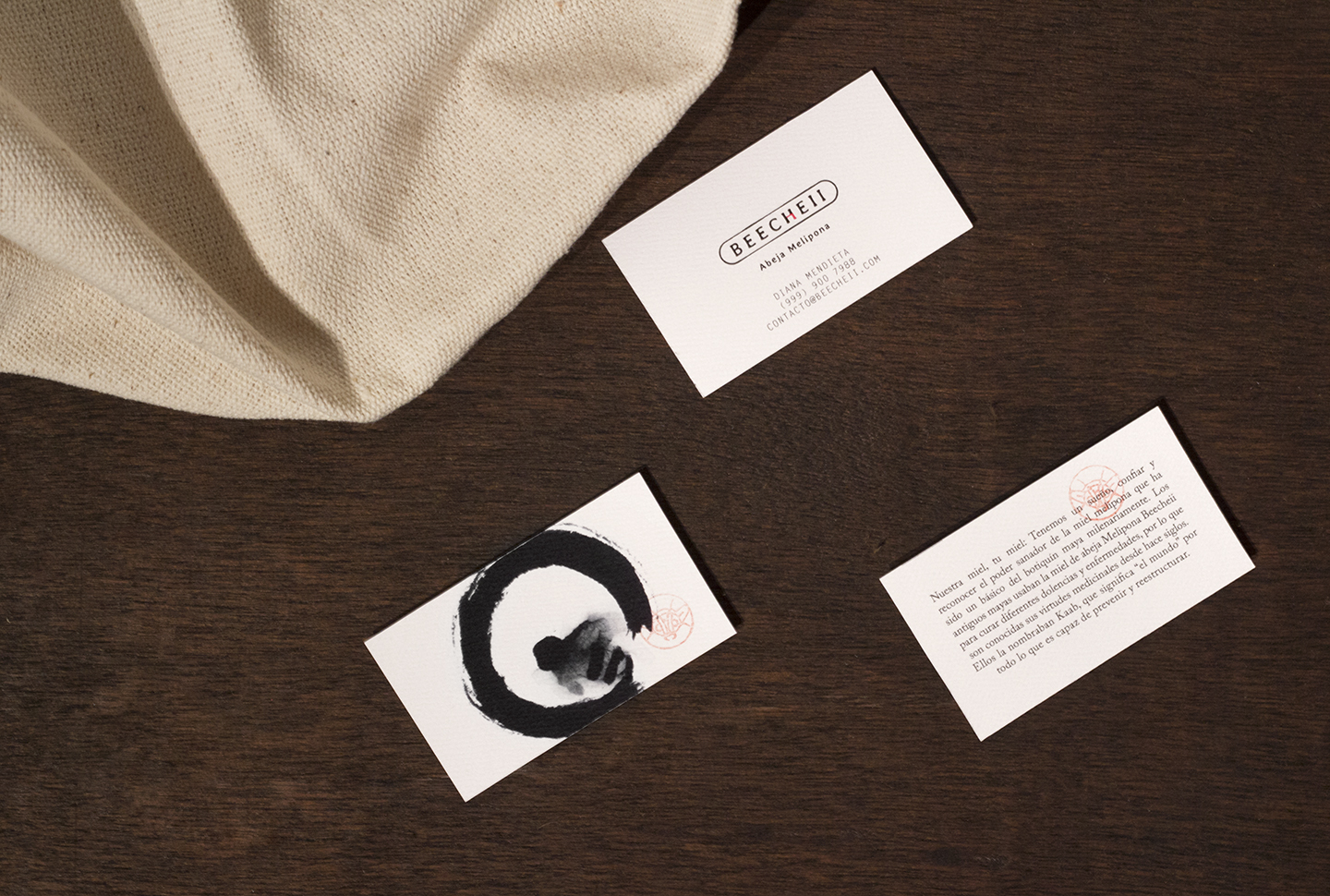
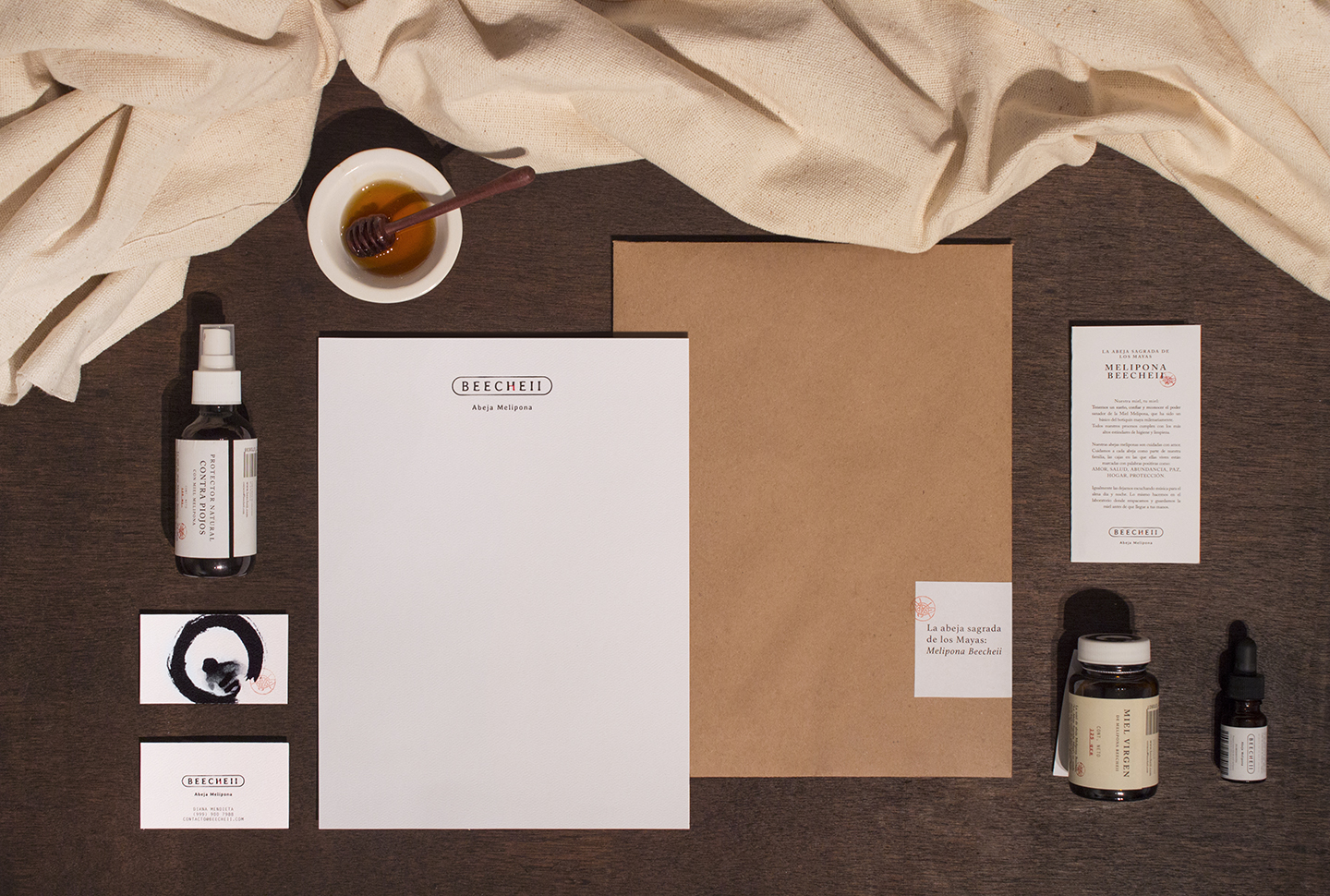
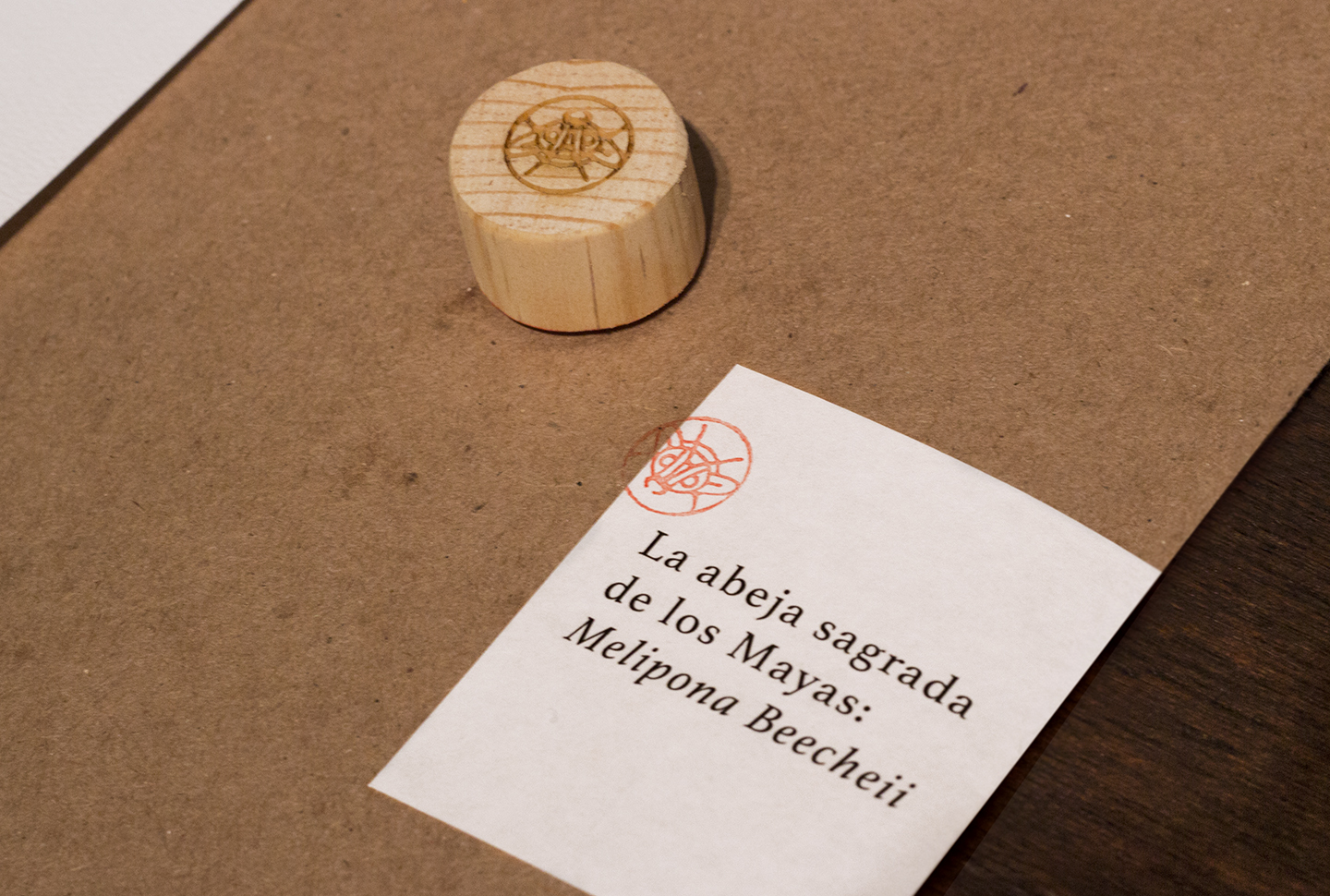
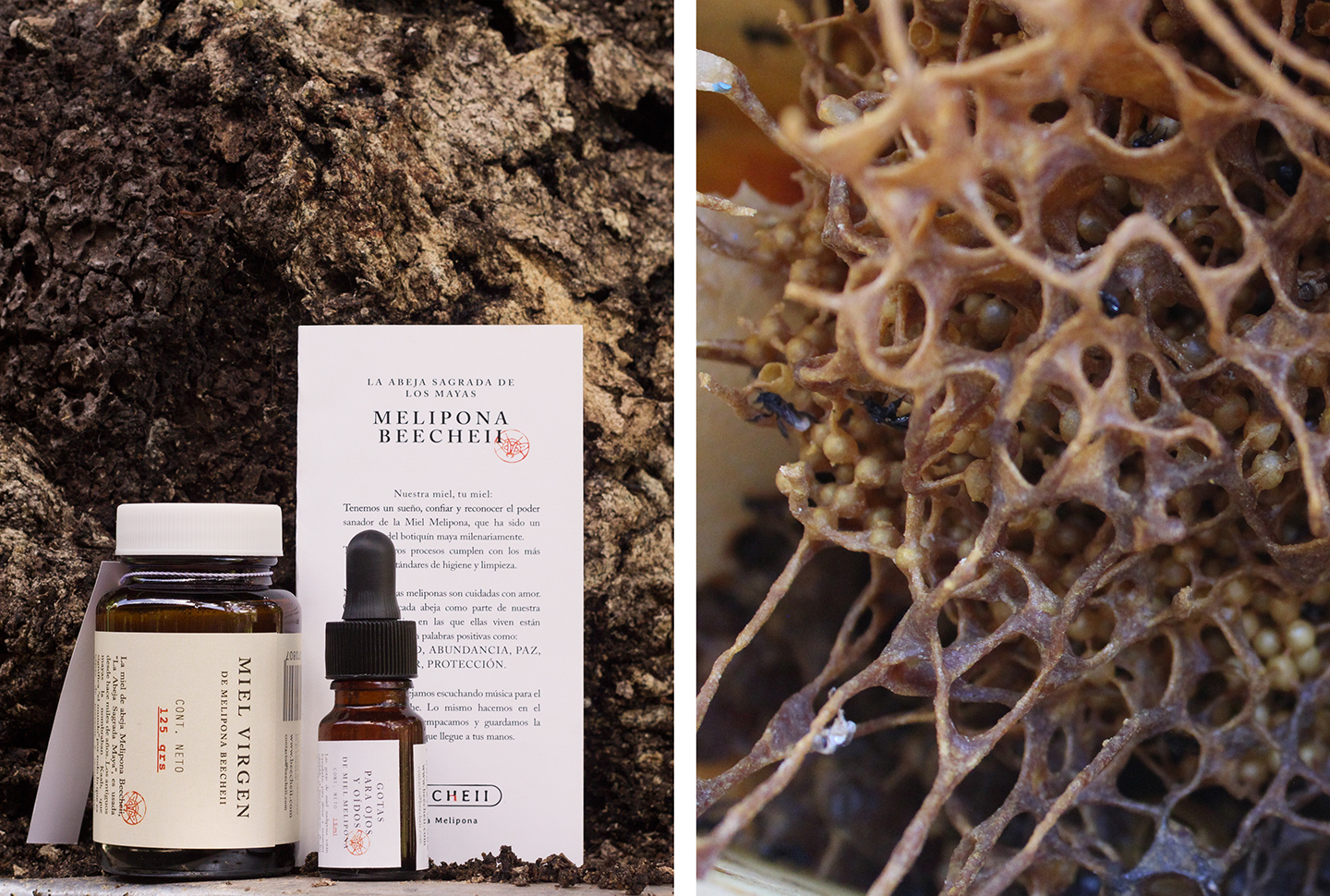
The bee that guards the entrance to the hive—called “Kalan” in the Maya language—becomes a fundamental part of the design, represented in a fusion of Maya aesthetics and Eastern tradition with the Hanko-style seal; and Eastern typographic art is also present through the Zen ensō and the guardian bee rendered in Chinese ink.
This Mayan-Zen syncretism forms the foundation of this valuable project, as it is a product steeped in tradition and heritage; every detail of the design aims to convey the process, the benefits, and the magical awareness that surround all products made with honey from the Melipona becheii bee.